
In the last few weeks, there's been a surge of support for expanding the A-League, and in particular calls for promotion and relegation to and from a second division. The arguments range from "we're bored with the current teams", "there's no punishment for poor performers", through to "overseas leagues all do it" and even "it's a football (soccer) thing".
The A-League simply can't afford a second division; the impact of distance, low population and football's competition in this country with other codes and other sports simply rule it infeasible.
People talk wistfully of the days of the old National Soccer League (NSL), which expanded at one stage to two conferences and 24 teams. I remember those days well - relative to today's A-League, games were played in poor stadiums, with sub-standard amenities, often located well away from convenient transport, and the standard of play was poor, by comparison. The vast majority of teams had a strong ethnic base - good for atmosphere, but marked by occasional unwanted tensions, and hardly conducive to attracting new supporters without a team.
So where will the money come from? The A-League, which transformed club football in this country and which represented a clean, fresh start in 2005, still can't sustain ten clubs without propping them up financially. So how would we manage with another division?
Our geography kills us. Across Europe, there are some leagues where the longest road trip is akin to travelling from Melbourne to Shepparton. There are few examples where clubs in Europe are forced to travel by air to participate in their domestic leagues, whereas it is simply a way of life for us. For this reason, it's no coincidence that none of the major Australian national leagues, the AFL, NRL or the A-League, prop up second tier competitions. It's not a cultural thing - it's purely economic.
From where would the clubs to form a new division be drawn? From which population centres? Football's competition with other codes and other sports in this country simply means they can't count on the same level of support compared with similar sized European cities. Geelong may have a similar population to a city like Mainz in Germany, but where the latter can count on solid support and occupy a place in the Bundesliga, simply not the same proportion of Geelong's population can be counted on to provide critical mass of support for an A-League club, being drawn to alternatives such as Geelong's massive AFL club, or in summer to Big Bash cricket.
The failure of North Queensland Fury and Gold Coast in recent times, and going back further into NSL days, the demise of clubs from Canberra (twice), Gippsland, Adelaide, Brisbane, even the perennially strong Sydney City and other examples show that the critical mass of support required to sustain a club can be tenuous.
If regional centres such as Canberra, Townsville and Geelong can't be counted on to support a sustainable A-League club, then can Melbourne and Sydney be relied upon to fill out a second division? The most expedient solution would be the reintroduction of "old" football clubs like South Melbourne Hellas and Melbourne Knights in Melbourne, and the likes of Sydney Croatia and others further north. While these clubs have proud traditions, loyal supporters and have developed some of our country's greatest footballers, many would see this as a retrograde step. The alternative is to invent new "neutral" clubs in the manner of Melbourne Victory and Melbourne City. And yet could Melbourne for example sustain a third such club without the benefit of ready-made "ethnic" support? I don't think so - even the cash-rich Melbourne City, parading one of the most star-studded and attractive A-League squads ever assembled, could only attract 8,000 to its first home match this season.
Is promotion and relegation simply a "football" thing? Absolutely not. There are a myriad of domestic Aussie football leagues with promotion and relegation. The Victorian Amateur Football Association has seven divisions which has had annual ups and downs as part of its DNA for decades.
In following national club football in this country every season since the inception of the NSL in 1977, I've seen too many ill-conceived wanderings off the path, which have continually served to hold back progression and consolidation, We simply can't afford the folly of a second division.
Friday, 21 October 2016


Tuesday, 27 May 2014
Palace's underdog king leads underdog nation
Crystal Palace's gritty midfielder Mile Jedinak was chosen last week to lead the Australian national team into the World Cup finals. For Jedinak, it marks a crowning point in a remarkable football journey.
Jedinak has just completed a remarkable season in the English Premier League. Palace, the unfashionable South London club I have followed for forty seasons, defied all the odds in not just retaining its status in the league but finishing 11th out of 20. This with the lowest paid squad in the EPL and having endured a horrid start with 9 losses from their first 10 games.
Jedinak emerged from Sydney's western suburbs to feature for Sydney United in Australia's old National Soccer League, progressing to Central Coast Mariners in the A-League before catching the eye of Turkish league club Gençlerbirliği. After a season and a half, he moved to South London.
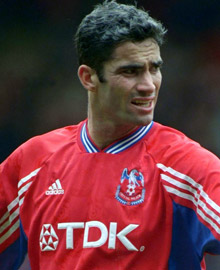
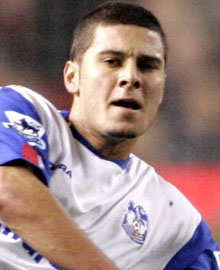
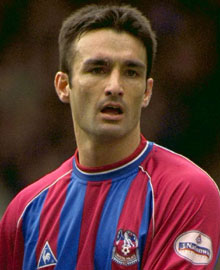
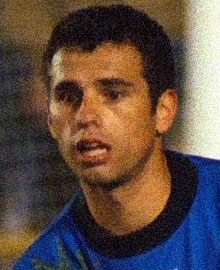
Crystal Palace has signed more than its fair share of Australian footballers in the last 20 years, but few have made a lasting impact on the South London faithful. With most of Palace's football played in the demanding and physical second tier of English football over that time, "elegant" midfielders like Nick Carle and Craig Foster aren't remembered fondly, while striker Nicky Rizzo, midfielder Anthony Danze, defender Shaun Murphy and keeper Steve Mautone stayed briefly without making impact. Kevin Muscat is recalled as not much more than a thug, and though Carl Veart is remembered affectionately in some quarters, his sobriquet "goal machine" was largely tongue in cheek. The only Aussies to make any lasting impact were Craig Moore, whose stay was all too brief after cash-strapped Palace had to sell him back to Glasgow Rangers, and Tony Popovic, who followed his playing career as assistant coach to Dougie Freedman.
Jedinak had a rocky start at Selhurst Park following his arrival in South London at the start of the 2011-12 season, with fans comments including "you see better players on a Sunday morning in the pub", "pretty likely he'll never cut it as a real midfielder" and "Dougie's worst signing simply not good enough". However, before long, the hardened Palace faithful came to admire his robust tackling, interceptions and hard yards. By 2012-13 he had become a fan favourite, was made club captain, and was Palace's player of the year.
Following the club's success in the Championship play-offs, Jedinak was inspirational in leading Palace's remarkable 2013-14 Premier League campaign superbly. He started every Premier League match for Palace, and made more tackles and interceptions than any other Premier League player during the season.
Jedinak has been handed the Socceroo captaincy at a pivotal time for the national team. Coach Ange Postecoglou has engaged in a clearing of the decks, with a series of retirements largely dispensing with the remnants of the so-called "golden" generation which reached peak with the 2006 World Cup campaign. What remains is the greenest, least-prepared squad seen in many years.
The 2014 Socceroos, faced with their own group of death against 2010 finalists Spain and the Netherlands, plus highly rated Chile, are expected to make a quick and potentially reputation-damaging first round exit in Brazil. The Aussies are given as much chance of making an impression as was Palace after promotion a year ago to the Premier League.
How fitting then that Jedinak, the battler from battling Palace, is charged with the responsibility of leading the youthful Australian über-underdogs into the fray. It is more than symbolic that Postecoglou forsook the option of choosing to hand the armband to the enduring and popular talisman Tim Cahill. Although he falls well short of the grammatical atrocities of the former Socceroo Mark Bosnich, Jedinak lacks the smooth talking and wherewithal of Cahill or former captain Lucas Neill. But the bustling "beast" from Selhurst Park seems just the right man in the right place for this job.
Jedinak has just completed a remarkable season in the English Premier League. Palace, the unfashionable South London club I have followed for forty seasons, defied all the odds in not just retaining its status in the league but finishing 11th out of 20. This with the lowest paid squad in the EPL and having endured a horrid start with 9 losses from their first 10 games.
Jedinak emerged from Sydney's western suburbs to feature for Sydney United in Australia's old National Soccer League, progressing to Central Coast Mariners in the A-League before catching the eye of Turkish league club Gençlerbirliği. After a season and a half, he moved to South London.

Crystal Palace has signed more than its fair share of Australian footballers in the last 20 years, but few have made a lasting impact on the South London faithful. With most of Palace's football played in the demanding and physical second tier of English football over that time, "elegant" midfielders like Nick Carle and Craig Foster aren't remembered fondly, while striker Nicky Rizzo, midfielder Anthony Danze, defender Shaun Murphy and keeper Steve Mautone stayed briefly without making impact. Kevin Muscat is recalled as not much more than a thug, and though Carl Veart is remembered affectionately in some quarters, his sobriquet "goal machine" was largely tongue in cheek. The only Aussies to make any lasting impact were Craig Moore, whose stay was all too brief after cash-strapped Palace had to sell him back to Glasgow Rangers, and Tony Popovic, who followed his playing career as assistant coach to Dougie Freedman.


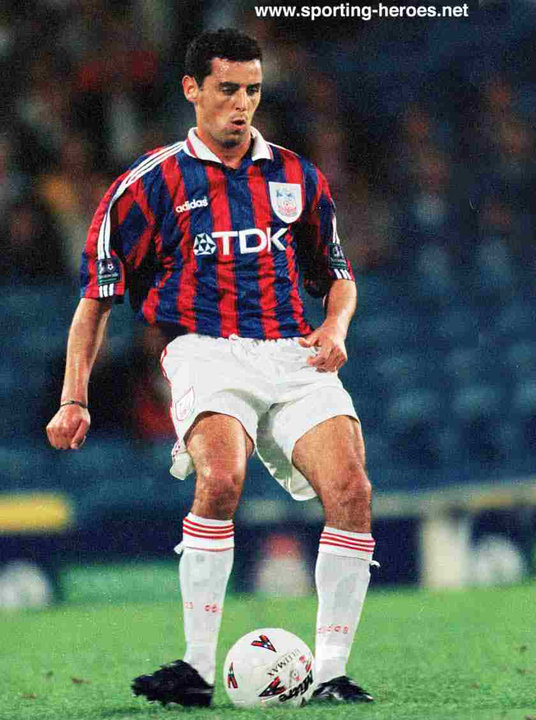
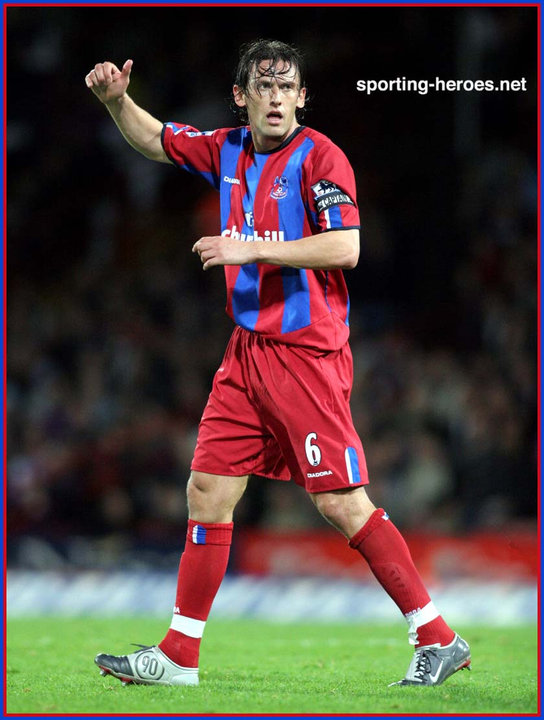
Jedinak had a rocky start at Selhurst Park following his arrival in South London at the start of the 2011-12 season, with fans comments including "you see better players on a Sunday morning in the pub", "pretty likely he'll never cut it as a real midfielder" and "Dougie's worst signing simply not good enough". However, before long, the hardened Palace faithful came to admire his robust tackling, interceptions and hard yards. By 2012-13 he had become a fan favourite, was made club captain, and was Palace's player of the year.
Following the club's success in the Championship play-offs, Jedinak was inspirational in leading Palace's remarkable 2013-14 Premier League campaign superbly. He started every Premier League match for Palace, and made more tackles and interceptions than any other Premier League player during the season.
Jedinak has been handed the Socceroo captaincy at a pivotal time for the national team. Coach Ange Postecoglou has engaged in a clearing of the decks, with a series of retirements largely dispensing with the remnants of the so-called "golden" generation which reached peak with the 2006 World Cup campaign. What remains is the greenest, least-prepared squad seen in many years.
The 2014 Socceroos, faced with their own group of death against 2010 finalists Spain and the Netherlands, plus highly rated Chile, are expected to make a quick and potentially reputation-damaging first round exit in Brazil. The Aussies are given as much chance of making an impression as was Palace after promotion a year ago to the Premier League.
How fitting then that Jedinak, the battler from battling Palace, is charged with the responsibility of leading the youthful Australian über-underdogs into the fray. It is more than symbolic that Postecoglou forsook the option of choosing to hand the armband to the enduring and popular talisman Tim Cahill. Although he falls well short of the grammatical atrocities of the former Socceroo Mark Bosnich, Jedinak lacks the smooth talking and wherewithal of Cahill or former captain Lucas Neill. But the bustling "beast" from Selhurst Park seems just the right man in the right place for this job.
Thursday, 22 May 2014
Atléti and La Liga provide a beautiful conclusion
For those of much more used to a diet of English Premier League, last Saturday's winner-takes-all contest in La Liga provided a stunning, absorbing, highly-satisfying bookend to the season of domestic league action in Europe.
Along with other Australian aficionados, I was faced with an interesting choice of late night /early morning viewing - the FA Cup final between Arsenal and Hull City, or 2nd vs 1st in Spain. While the former probably exceeded its billing and provided a more drawn-out and closer contest than most pundits predicted, I was so glad I chose the latter.
The La Liga fixture computer had provided the most dramatic of final round contests. Barcelona would host Atlético Madrid, with the visitors in pole position, but needing at least a draw to win the title. A home win would reap the title for Barcelona.
Some context. For the previous nine seasons the title had been shared between the two superpowers of Spanish football, Barcelona and Real Madrid, and in only one of those seasons had another team finished runner-up. Atlético, forever in the shadow of its royal city rival, had not won the title since 1996. More than this, Atlético faced into the 2013-2014 season with a financial disadvantage routinely seen across Europe's leagues. The eleven who started this game in Atlético's away yellow had cost under €40m, less than the individual value of most in Barcelona's team. In EPL terms, this was Aston Villa attempting to trump Man City and Chelsea for the title.
The stage was set brilliantly at Barcelona's Nou Camp, with sunshine dousing the 100,000 crowd, of which only 500 seats had been made available for the visiting fans. A mass display from the 100,000 (less the 500) provided a foreboding entree for the visiting team. We cut to the sight of the nervous Atlético players waiting in the tunnel. Eventually they were joined by their opposite number from Barca, and we were treated to the sight of genuine, affectionate embraces between the opponents - extraordinary given the momentous occasion, and that shortly they were to engage so vigorously and physically on the field of battle, and a contrast with the sullen, uber stoicism seen in EPL tunnels from a Gerrard or a Terry.
Come kickoff and quickly the viewing audience was immersed in a superb contest. Barcelona, certainly not at their best, showing great nerves, but buoyed by the mass home support, and having the lion's share of possession. Atlético, soaking up great pressure, skilled and dangerous on the break, and with no small measure of confidence drawn from the previous 37 games of out-performance.
Then the drama. Within a few first-half minutes, Atlético had lost both top scorer Costa and Turan to injury. Perhaps Barca smelled blood, but whatever it was, Sánchez conjured up a freakish goal out of nothing for the home team. Half time and the title was heading back to Barcelona, and a 5th title in 6 years. The alluring Atlético coach Diego Simeone was seen gently shaking his head, wondering how fate was conspiring against him and his team.
Come the second half, and it was Atlético who bounced out of the blocks, dominating possession and after twice going close, finding the precious equaliser. Inspired by their rally, and with the holy grail now within reach, the red and whites (in their away yellow) foiled the desperate forays from the home team. The tension was palpable, the home support increasingly fervent.
The climax. The final whistle. Scenes of utter jubilation from the Atlético players and the small dot of away supporters on the Nou Camp canvas. And then, perhaps the most extraordinary sight of the afternoon, with great swathes of the Barcelona home support breaking into spontaneous warm and generous applause in recognition of the contest they had witnessed, and the visiting team's gallantry and massive achievement in dragging the title away from the big two. Atléti's proud coach Simeone joined in the celebrations, and then briefly, but beautifully, returned to his dugout as the television cameras caught him in a quiet moment of proud reflection on the enormity of what he and his team had just accomplished.
Along with other Australian aficionados, I was faced with an interesting choice of late night /early morning viewing - the FA Cup final between Arsenal and Hull City, or 2nd vs 1st in Spain. While the former probably exceeded its billing and provided a more drawn-out and closer contest than most pundits predicted, I was so glad I chose the latter.
The La Liga fixture computer had provided the most dramatic of final round contests. Barcelona would host Atlético Madrid, with the visitors in pole position, but needing at least a draw to win the title. A home win would reap the title for Barcelona.
Some context. For the previous nine seasons the title had been shared between the two superpowers of Spanish football, Barcelona and Real Madrid, and in only one of those seasons had another team finished runner-up. Atlético, forever in the shadow of its royal city rival, had not won the title since 1996. More than this, Atlético faced into the 2013-2014 season with a financial disadvantage routinely seen across Europe's leagues. The eleven who started this game in Atlético's away yellow had cost under €40m, less than the individual value of most in Barcelona's team. In EPL terms, this was Aston Villa attempting to trump Man City and Chelsea for the title.
The stage was set brilliantly at Barcelona's Nou Camp, with sunshine dousing the 100,000 crowd, of which only 500 seats had been made available for the visiting fans. A mass display from the 100,000 (less the 500) provided a foreboding entree for the visiting team. We cut to the sight of the nervous Atlético players waiting in the tunnel. Eventually they were joined by their opposite number from Barca, and we were treated to the sight of genuine, affectionate embraces between the opponents - extraordinary given the momentous occasion, and that shortly they were to engage so vigorously and physically on the field of battle, and a contrast with the sullen, uber stoicism seen in EPL tunnels from a Gerrard or a Terry.
Come kickoff and quickly the viewing audience was immersed in a superb contest. Barcelona, certainly not at their best, showing great nerves, but buoyed by the mass home support, and having the lion's share of possession. Atlético, soaking up great pressure, skilled and dangerous on the break, and with no small measure of confidence drawn from the previous 37 games of out-performance.
Then the drama. Within a few first-half minutes, Atlético had lost both top scorer Costa and Turan to injury. Perhaps Barca smelled blood, but whatever it was, Sánchez conjured up a freakish goal out of nothing for the home team. Half time and the title was heading back to Barcelona, and a 5th title in 6 years. The alluring Atlético coach Diego Simeone was seen gently shaking his head, wondering how fate was conspiring against him and his team.
Come the second half, and it was Atlético who bounced out of the blocks, dominating possession and after twice going close, finding the precious equaliser. Inspired by their rally, and with the holy grail now within reach, the red and whites (in their away yellow) foiled the desperate forays from the home team. The tension was palpable, the home support increasingly fervent.
The climax. The final whistle. Scenes of utter jubilation from the Atlético players and the small dot of away supporters on the Nou Camp canvas. And then, perhaps the most extraordinary sight of the afternoon, with great swathes of the Barcelona home support breaking into spontaneous warm and generous applause in recognition of the contest they had witnessed, and the visiting team's gallantry and massive achievement in dragging the title away from the big two. Atléti's proud coach Simeone joined in the celebrations, and then briefly, but beautifully, returned to his dugout as the television cameras caught him in a quiet moment of proud reflection on the enormity of what he and his team had just accomplished.
Friday, 20 January 2012
Fossie, Slater lead a dismal week
A week for reflection on matters round-ball. In Australia, a curious contretemps between former Socceroo team-mates Craig Foster and Robbie Slater. Both now long-time pundits on the game in Australia, they click their keyboards rather like they played their football - brash, gung-ho and a little raw. Foster this week peddled a well-worn theme of his, the disdain for anything from the mother country, or thereabouts, within the Aussie football context. This time it was Melbourne Victory appointee Jim Magilton in his sights. Foster, aided and abetted by flagging football warhorse Les Murray, saw Magilton's appointment as an unwanted pimple on the new face of Australian football - one which has progressively dispensed with its ties to our British past, in favour of more cosmopolitan influences.
Slater, also one not to mince his words, and having spent his English playing days at a slightly higher level than Foster, branded his former teammate as racist for airing such anti-British views. He also managed to throw in some recollection of a Socceroo incident from the distant past which somehow implicated Foster. Irrelevant and tawdry.
If matters football were rather scrappy locally, there was a week of similar untidiness globally. Pepe's stamp on Messi in the latest instalment of the El Classico in Spain, and a reinforcement of the polarity of English football these days - Chelsea's rather odd signing of three young brothers from Luton Town, and the sad near annulment of Darlington FC from the face of football altogether.
Maybe next week we can focus on the positives on the pitch!
Thursday, 9 June 2011
The best of times, the worst of times
With the sun just set on the European season, a chance to reflect on a whirlwind finish as leagues, cup competitions and play-offs came to their conclusion. Undoubtedly the climax and highlight was the UEFA Champions League final, bringing together two stand-out teams in Barcelona and Manchester United to decide the trophy at Wembley. The occasion provided a great match and a great winner in Barcelona. The Catalans were masterful, worthy of every superlative, and a cut above United. Yet despite their dominance, the game remained in the balance for some time. After the Spaniards have taken a deserved lead worthy of their superiority, Rooney stepped up with a superb equaliser to leave the contest level at the break. For an Aussie, it was another example of the great attraction of the code - had it been Aussie Rules, a half time score of Barcelona 11.7, Man Utd 3.2 would have been apt, with the game all over.
Come the second half, Barcelona did exert control and the 3-1 win left even the most one-eyed United fans conceding they had lost to the better team. Having sat through a few of these, the Catalans' dominance took me back to AC Milan's similar superiority with their Dutch trio of Rijkaard, Van Basten and Gullit leading the way some 20 years prior.
What a contrast therefore to witness just days later the calamitous standing of FIFA, with scandalous allegations merely confirming what most thought, that the peak body in world football is a corrupt and lamentable beast. Another blow for those promoting the game in Australia. The naysayers having a field day- not only is the game ruled by cheats at the bottom - the divers, the "simulation" merchants, but it's clearly ruled by cheats at the top!
The juxtaposition of the Champions League final with the ructions of Blatter and co just days later was quite maddening. I hope as the years roll on I'll just be left with memories of the former, a beautiful night in London where the red and blue stripes reigned supreme.
Come the second half, Barcelona did exert control and the 3-1 win left even the most one-eyed United fans conceding they had lost to the better team. Having sat through a few of these, the Catalans' dominance took me back to AC Milan's similar superiority with their Dutch trio of Rijkaard, Van Basten and Gullit leading the way some 20 years prior.
What a contrast therefore to witness just days later the calamitous standing of FIFA, with scandalous allegations merely confirming what most thought, that the peak body in world football is a corrupt and lamentable beast. Another blow for those promoting the game in Australia. The naysayers having a field day- not only is the game ruled by cheats at the bottom - the divers, the "simulation" merchants, but it's clearly ruled by cheats at the top!
The juxtaposition of the Champions League final with the ructions of Blatter and co just days later was quite maddening. I hope as the years roll on I'll just be left with memories of the former, a beautiful night in London where the red and blue stripes reigned supreme.
Tuesday, 25 January 2011
Victory the loser amid Muscat mess
More than just a few bytes have been consumed in the wake of Kevin Muscat's horror tackle on Adrian Zahra which marred Saturday's bristling A-league derby between Melbourne Victory and Melbourne Heart. At time of writing, the Victory's hardman's crude lunge seems likely to provide a coarse full stop to a career punctuated by a number of violent episodes.
As much as this incident has provoked vitriol towards the man himself, public opinion has also biased firmly against his club. In six seasons Melbourne Victory has established itself as the biggest club in the Australian A-league. Its support is the country's largest and its two titles are only matched by Sydney FC. Its star players such as Archie Thompson and Muscat have attracted as much media attention as any, while Ernie Merrick remains the only surviving A-league coach from season one.
The public statements by coach Merrick following Muscat's act via have been truly lamentable. Merrick forsook the opportunity to denounce Muscat and his action. Post-match he tediously grasped the "I didn't see it" defence before launching into criticism of the referee's performance. The next day he chose to defend Muscat's "professionalism" while bleating that Victory weren't the kind of club that played dirty. This simply provided a green light for the parading of a litany of violent acts perpetrated by Muscat and his team mates over a long period. Finally he had the sheer temerity on Melbourne radio to lambaste the management at Melbourne Heart who had by contrast conducted themselves with quiet decorum since Saturday's contretemps.
For Victory members like me, this has been a gut-wrenching time. For all his faults, Muscat has been a leadership figure at the club and contributed positively to its success. But for me that has been obliterated and more after Saturday. He was due to retire and now should immediately. But more than that the implied endorsement of Muscat by the club is a bitter pill for me to swallow.
In this its first season in the A-league, Melbourne Heart has genuinely struggled to find a point of difference, a unique selling proposition in marketing terms, for it to build a critical mass of support. Melbourne's size and sporting disposition should support two teams, but to date, notwithstanding an attractive squad (and the league's most attractive playing strip) Heart has managed gates often not much more than 6,000.
I'd reckon that after this week, Heart can afford to stop worrying. In a single blow (literally), Muscat - and by association his club - have kick started Heart's recruitment drive. There were over 32,000 at the derby on Saturday, by far the biggest gate for any game in the league this year, and far exceeding the combined attendances of both constituent clubs. For those casual football followers who fronted for the first time this season, there could be only one club that would have their support after Saturday's and subsequent events - and Victory is indeed the loser.
As much as this incident has provoked vitriol towards the man himself, public opinion has also biased firmly against his club. In six seasons Melbourne Victory has established itself as the biggest club in the Australian A-league. Its support is the country's largest and its two titles are only matched by Sydney FC. Its star players such as Archie Thompson and Muscat have attracted as much media attention as any, while Ernie Merrick remains the only surviving A-league coach from season one.
The public statements by coach Merrick following Muscat's act via have been truly lamentable. Merrick forsook the opportunity to denounce Muscat and his action. Post-match he tediously grasped the "I didn't see it" defence before launching into criticism of the referee's performance. The next day he chose to defend Muscat's "professionalism" while bleating that Victory weren't the kind of club that played dirty. This simply provided a green light for the parading of a litany of violent acts perpetrated by Muscat and his team mates over a long period. Finally he had the sheer temerity on Melbourne radio to lambaste the management at Melbourne Heart who had by contrast conducted themselves with quiet decorum since Saturday's contretemps.
For Victory members like me, this has been a gut-wrenching time. For all his faults, Muscat has been a leadership figure at the club and contributed positively to its success. But for me that has been obliterated and more after Saturday. He was due to retire and now should immediately. But more than that the implied endorsement of Muscat by the club is a bitter pill for me to swallow.
In this its first season in the A-league, Melbourne Heart has genuinely struggled to find a point of difference, a unique selling proposition in marketing terms, for it to build a critical mass of support. Melbourne's size and sporting disposition should support two teams, but to date, notwithstanding an attractive squad (and the league's most attractive playing strip) Heart has managed gates often not much more than 6,000.

I'd reckon that after this week, Heart can afford to stop worrying. In a single blow (literally), Muscat - and by association his club - have kick started Heart's recruitment drive. There were over 32,000 at the derby on Saturday, by far the biggest gate for any game in the league this year, and far exceeding the combined attendances of both constituent clubs. For those casual football followers who fronted for the first time this season, there could be only one club that would have their support after Saturday's and subsequent events - and Victory is indeed the loser.
Friday, 7 January 2011
Asian Cup sets twin test for Aussie football
Australia will be tested in more ways than one at the Asian Cup finals tournament which just kicked-off in Qatar. The first will be to maximise its playing performance in difficult conditions against eager and talented opposition. The second and arguably greater challenge is for Australia to act with grace and respect to towards both its opponents and towards the competition in general.
The 2007 tournament brings back only bad memories for me. In the wake of the Hiddink-led brilliance of Germany 2006, the finals tournament was a substantial let-down. Australia underestimated the opposition and was poorly behaved on and off the field. Most of the fallout followed the 3-1 group loss to Iraq. Immediately after the final whistle TV viewers were treated to the unpopular boss Graham Arnold bagging the playing squad, with Mark Viduka seconds later challenging the boss's comments. Captain Lucas Neill had "led" by example with a red card for dissent.
Following Australia's exit at the hands of Japan, red-carded midfielder Vince Grella in a massive dummy spit scorned the AFC, its referees and each of Oman, Iraq, Thailand and Japan. The net impact left onlookers with the impression that Australia didn't respect the competition, its organisers or its competitors.
Aussie football followers would expect increased respect, particularly in light of the announcement this week that, albeit as sole bidder, Australia had been handed the hosting rights for the 2015 Asian Cup finals. It was rather bemusing to see Melbourne Victory hard-man Kevin Muscat singing the praises of the competition, as he hasn't managed to do so for the confederation's other major tournament, the AFC Champions League. With his club's continuing poor performance in the competition, Muscat pretty well bagged the entire tournament once Victory had achieved rapid fire elimination last time around.
The blanket lack of support from the Asian confederation for Australia's hapless bid for the 2002 World Cup means that Australia must display consistent and committed support of football in Asia. Let's hope the report card at the end of the 2011 version has more ticks than we saw last time around.
Thursday, 2 December 2010
The $45 million vote
Australians woke to the news this morning that their $45 million investment in attempting to secure the 2022 World Cup hosting rights had yielded just one vote among the 22 FIFA executives.
For the bid team, the news that Australia was eliminated first in the voting process, failing even to trump either South Korea or Japan came as total surprise. Ultimately, this has simply provided another reminder of Australia's modest status and influence in world football.
Respected FFA chair Frank Lowy may boast a successful track record in influencing local politicians, but world football politics is many steps beyond. The ultimate, perhaps, well beyond even playthings such as the Olympics. Asian Football Confederation president Mohamed Bin Hammam demonstrated the benefit of his wide experience at the highest level, directing Qatar to glittering success at the expense of the US.
For FFA chief executive Ben Buckley, success with Australia's bid would have provided the ultimate adornment to his CV and provided a launching pad for greater personal glory. Instead, he along with Lowy will wear much of the blame for Australia's pitiful showing. Others will come in the firing line - Prime Minister Julia Gillard, who stayed away from the final bid presentation ( did she smell failure?) and other less obvious targets such as Aussie Rules chief Andrew Demetriou, cast by Aussie soccer fans as the prime villain for his code's obstruction in the bid process.
The response of the hardcore of Australian football critics within the country will be hard for lovers of the game to bear, but we've been there before, most typically in the wake of past failures by the Socceroos, or with the at times halting progress of the national league. Their pronouncements will be be predictable and painful.
The response of the local populace at large will be more interesting to monitor. There will be those who will crudely dismiss FIFA - and football - as corrupt, dismiss the voting as a simple success for the oil-wealthy, lambast Australia's bid as a total waste of time and effort, and find solace in the familiar, local pursuits which we understand better and with which we have greater success.
Genuine local football followers, devastated, will bounce back. While we will dream of what it would have been like to land the World Cup, and for those of my vintage reflect on the fact that the tournament will now most probably never be hosted in Australia within my lifetime, we are well used to setbacks to our beloved code in our country. As the pundits reflected last night, today feels more than a little like the morning after Iran 2-2 in 1997, and Uruguay 0-3 in 2001. But life goes on, the round ball continues to roll. We keep the faith!
For the bid team, the news that Australia was eliminated first in the voting process, failing even to trump either South Korea or Japan came as total surprise. Ultimately, this has simply provided another reminder of Australia's modest status and influence in world football.
Respected FFA chair Frank Lowy may boast a successful track record in influencing local politicians, but world football politics is many steps beyond. The ultimate, perhaps, well beyond even playthings such as the Olympics. Asian Football Confederation president Mohamed Bin Hammam demonstrated the benefit of his wide experience at the highest level, directing Qatar to glittering success at the expense of the US.
For FFA chief executive Ben Buckley, success with Australia's bid would have provided the ultimate adornment to his CV and provided a launching pad for greater personal glory. Instead, he along with Lowy will wear much of the blame for Australia's pitiful showing. Others will come in the firing line - Prime Minister Julia Gillard, who stayed away from the final bid presentation ( did she smell failure?) and other less obvious targets such as Aussie Rules chief Andrew Demetriou, cast by Aussie soccer fans as the prime villain for his code's obstruction in the bid process.
The response of the hardcore of Australian football critics within the country will be hard for lovers of the game to bear, but we've been there before, most typically in the wake of past failures by the Socceroos, or with the at times halting progress of the national league. Their pronouncements will be be predictable and painful.
The response of the local populace at large will be more interesting to monitor. There will be those who will crudely dismiss FIFA - and football - as corrupt, dismiss the voting as a simple success for the oil-wealthy, lambast Australia's bid as a total waste of time and effort, and find solace in the familiar, local pursuits which we understand better and with which we have greater success.
Genuine local football followers, devastated, will bounce back. While we will dream of what it would have been like to land the World Cup, and for those of my vintage reflect on the fact that the tournament will now most probably never be hosted in Australia within my lifetime, we are well used to setbacks to our beloved code in our country. As the pundits reflected last night, today feels more than a little like the morning after Iran 2-2 in 1997, and Uruguay 0-3 in 2001. But life goes on, the round ball continues to roll. We keep the faith!
Wednesday, 22 September 2010
A-league, aged 6, misbehaving
On a Friday night in December 2006 I was one of 50,333 who turned up to (then) Telstra Dome to witness Melbourne Victory and Sydney FC play out a 0-0 draw. The game itself never reached great heights but the occasion was unforgettable. Long-time watchers of national league football in Australia like myself were simply pinching themselves that night, never ever contemplating that they would witness a crowd of that proportion attending a club fixture in this country, in our lifetime. It was a night we simply celebrated football.
It couldn't last, of course. The following season provided the high water mark, with every A-league team but Perth Glory averaging gates over 10,000 . Now in season six, Melbourne Victory and Perth Glory are the only clubs to average more than 10,000 per game. And just tonight a barren 2,091 watched Gold Coast host Newcastle, the lowest A-league crowd since the hapless New Zealand Knights hosted Central Coast in their final season.
Worse than this, clubs are haemorrhaging financially under the strain of the reduced level of interest. The league model where cashed-up owners seem to single-handedly determine a team's future seems critically flawed. Newcastle, Gold Coast, North Queensland all in recent trouble. Prior to that Adelaide and Brisbane having to be bailed out.
The FFA has taken the brunt of the criticism from media, fans and the football community with bones of contention being the peak body's focus on the 2022 World Cup bid ahead of support for the A-league, and the lack of a separate and independent body to manage the league's affairs.
For Aussie football fans of a particular vintage, the current woes, together with some of the ludicrous suggestions to fix them, sound awfully like the dreadful lurching of the former National Soccer League over its often painful existence from 1977 to 2004. Some themes:
It couldn't last, of course. The following season provided the high water mark, with every A-league team but Perth Glory averaging gates over 10,000 . Now in season six, Melbourne Victory and Perth Glory are the only clubs to average more than 10,000 per game. And just tonight a barren 2,091 watched Gold Coast host Newcastle, the lowest A-league crowd since the hapless New Zealand Knights hosted Central Coast in their final season.
Worse than this, clubs are haemorrhaging financially under the strain of the reduced level of interest. The league model where cashed-up owners seem to single-handedly determine a team's future seems critically flawed. Newcastle, Gold Coast, North Queensland all in recent trouble. Prior to that Adelaide and Brisbane having to be bailed out.
The FFA has taken the brunt of the criticism from media, fans and the football community with bones of contention being the peak body's focus on the 2022 World Cup bid ahead of support for the A-league, and the lack of a separate and independent body to manage the league's affairs.
For Aussie football fans of a particular vintage, the current woes, together with some of the ludicrous suggestions to fix them, sound awfully like the dreadful lurching of the former National Soccer League over its often painful existence from 1977 to 2004. Some themes:
- "We need to create a second division" The A-league is struggling to keep 11 clubs afloat, yet there are those who would welcome double the number. The short-lived North and South conferences of the old NSL and the failure rate of so many clubs tells a cautionary tale.
- "Old soccer needs to be welcomed back to the fold" An undeniable factor in the A-league's success in cities like Melbourne has been the absence of any ethnic association with the clubs.
- "The FFA needs to be run by soccer people again" The most ludicrous charge in the current mess is that FFA CEO Ben Buckley is apparently an AFL-conspired Trojan Horse, set loose in the FFA to inflict damage on behalf of other codes. The best administrators the peak football body has had in this country have been John O'Neill, a rugby man, and Buckley a former AFL man. The eternal petty politics, back-stabbing, conflicts of interest and sheer amateurism of the former NSL administration remains an ugly memory of days gone by.
- "We need a national cup competition" Notwithstanding that the FA Cup appears to have shed substantial gloss over recent years, the concept of a national cup competition, where rank amateur suburban clubs could battle progressively through preliminary rounds, later bringing in State League, then A-league clubs, does have a certain romantic appeal. Never mind that similar concepts in the days of NSL never really got off the ground. But the effort required now to make this initiative work would be an unnecessary distraction from making the league work.
- "It needs to be on free-to-air television" Unsurprisingly, this notion seems to feature most heavily on the website of SBS, the free-to-air network that most covets the rights held by Foxtel. Possibly, the Ten network might be interested in using its One channel for A-league, but I'd be hesitant in assuming that the grass is greener on the free-to-air side of the fence.
Sunday, 27 June 2010
Australia - the wash-up
In the end, it was as I predicted. Not that I'm wanting to gloat, and I wished it had all ended differently. But Australia's failure to progress from the group stage was always going to be the most likely outcome.
Pundits and Aussie coach Pim Verbeek pointed to our 4-0 drubbing by Germany as the reason for failure. Not sure I agree. After that game we knew wins against Ghana and Serbia would get us through. We didn't achieve that - and didn't get through.
We weren't helped along in our quest by being down to 10 men in two games. Tim Cahill's red card in the second half against Germany was probably harsh, although his tackle was reckless and naive. Harry Kewell's first half red card v Ghana, despite the hysteria in Australia, was merited. It capped a thoroughly miserable campaign for Australia's pin-up boy (well, Channel 9's at least). But we did have chances to put Ghana away, even though we were disadvantaged numerically. Wilkshire, Kennedy and Chipperfield would have wished for calmer heads and a more adroit touch when faced with gilt-edged chances.
Our strike force always looked under-strength. Verbeek chose only three strikers in his squad - Kennedy, Rukavytsya and Kewell - didn't select any to start against Germany or Ghana, and none of them scored in the three group games. Richard Garcia was bizarrely given a forward assignment in the Germany debacle.
In midfield, it was a very mixed bag. Grella totally down on form, then fitness. Bresciano struggled to impress, a victim of an injury-interrupted few months. Culina went missing for long periods. Cahill only showed against Serbia what he was capable of. Valeri certainly wasn't the worst of this bunch. Emerton did quite well given his long absence leading to the finals. The best, incredibly, was the much-maligned Brett Holman. He was sparky in each of his appearances, and scored a wonderful goal against Serbia. In hindsight, Pim should have given him more minutes.
The concerns in the middle of defence, amplified in the warm-up games, were there for all to see against Germany. Moore, exposed in that fixture, lifted for the Ghana game, which will be his last in the green and gold. Lucas Neill didn't have a great tournament, as player or captain. Beauchamp was an adequate replacement for Moore against Serbia.
Luke Wilkshire contributed throughout, albeit out of his depth on occasion. Chipperfield was poor against Germany, but came back well in his Socceroo swansong. Carney battled gamely.
Pim Verbeek lost his nerve before the Germany game, upsetting team balance with a bizarre line-up bereft of attacking intent. Although pundits such as Craig Foster were totally unforgiving in their damning of Verbeek, the Aussie boss got his tactics more or less right in the last two games. His legacy for Australian football however will be rather anonymous.
Australia now faces a challenging road for 2014 qualification, with the 2006 generation probably all gone by then. Moore and Chipperfield have retired, and Emerton, Kewell, Bresciano, Neill and Grella unlikely to go beyond next year's Asian Cup finals. Culina, Cahill and Schwarzer may last a little longer. Wilkshire, Valeri and Holman may form the basis of the next challenge.
Pundits and Aussie coach Pim Verbeek pointed to our 4-0 drubbing by Germany as the reason for failure. Not sure I agree. After that game we knew wins against Ghana and Serbia would get us through. We didn't achieve that - and didn't get through.
We weren't helped along in our quest by being down to 10 men in two games. Tim Cahill's red card in the second half against Germany was probably harsh, although his tackle was reckless and naive. Harry Kewell's first half red card v Ghana, despite the hysteria in Australia, was merited. It capped a thoroughly miserable campaign for Australia's pin-up boy (well, Channel 9's at least). But we did have chances to put Ghana away, even though we were disadvantaged numerically. Wilkshire, Kennedy and Chipperfield would have wished for calmer heads and a more adroit touch when faced with gilt-edged chances.
Our strike force always looked under-strength. Verbeek chose only three strikers in his squad - Kennedy, Rukavytsya and Kewell - didn't select any to start against Germany or Ghana, and none of them scored in the three group games. Richard Garcia was bizarrely given a forward assignment in the Germany debacle.
In midfield, it was a very mixed bag. Grella totally down on form, then fitness. Bresciano struggled to impress, a victim of an injury-interrupted few months. Culina went missing for long periods. Cahill only showed against Serbia what he was capable of. Valeri certainly wasn't the worst of this bunch. Emerton did quite well given his long absence leading to the finals. The best, incredibly, was the much-maligned Brett Holman. He was sparky in each of his appearances, and scored a wonderful goal against Serbia. In hindsight, Pim should have given him more minutes.
The concerns in the middle of defence, amplified in the warm-up games, were there for all to see against Germany. Moore, exposed in that fixture, lifted for the Ghana game, which will be his last in the green and gold. Lucas Neill didn't have a great tournament, as player or captain. Beauchamp was an adequate replacement for Moore against Serbia.
Luke Wilkshire contributed throughout, albeit out of his depth on occasion. Chipperfield was poor against Germany, but came back well in his Socceroo swansong. Carney battled gamely.
Pim Verbeek lost his nerve before the Germany game, upsetting team balance with a bizarre line-up bereft of attacking intent. Although pundits such as Craig Foster were totally unforgiving in their damning of Verbeek, the Aussie boss got his tactics more or less right in the last two games. His legacy for Australian football however will be rather anonymous.
Australia now faces a challenging road for 2014 qualification, with the 2006 generation probably all gone by then. Moore and Chipperfield have retired, and Emerton, Kewell, Bresciano, Neill and Grella unlikely to go beyond next year's Asian Cup finals. Culina, Cahill and Schwarzer may last a little longer. Wilkshire, Valeri and Holman may form the basis of the next challenge.
Thursday, 17 June 2010
Kiwi joy contrasts Aussie gloom
A delight to see New Zealand snatch a late equaliser against Slovakia in their first finals appearance since 1982. Most of the football world were expecting the plucky Kiwis to be the whipping boys of the tournament but it became quite plain quite quickly in this fixture that they were not going to be over-awed - well not by Slovakia at least.
The attitude from the All Whites even before they arrived in South Africa was quite refreshing. Simply, they had already achieved their goal - to make it to the finals. Anything in addition to that would be pure bonus. And indeed, the bonus has already been realised, with their first point ever in the finals.
Compare and contrast the teeth-gnashing over in the Aussie camp. They have set themselves a target of getting to at least the final 16. And such expectations have been amplified and exaggerated by the mainstream media and the much of fan-dom back in Australia. So therefore in light of their stunning failure against Germany such ambitions appear stymied, just 90 playing minutes into the tournament.
Over my lifetime there's been a ebb and flow between the respective fortunes of the Australian and New Zealand national football teams. Traditionally set against each other in World Cup qualifying, the Socceroos had the edge over the All Whites in the 1970s, managing outright qualification in 1974.
Come 1981 and the tables had turned. Australia lost its way principally owing to the brief and erratic reign of football journeyman Rudi Gutendorf. After the godlike Rale Rasic had been the victim of petty politics, Gutendorf was the third in line of distinctly unimpressive Socceroo managers - Brian Green, who was sacked after caught shoplifting, then the unknown Jimmy Shoulder who failed miserably.
Meanwhile over in the Kiwi camp, Poms John Adhsead and Kevin Fallon assembled a solid bunch of amateurs and semi-pros. After a 3-3 draw in New Zealand, the united Kiwis managed a historic, deserved 2-0 win in Sydney over a clearly disunited Australia. Gutendorf was sacked on the spot, and New Zealand progressed to final Asian qualifying, which turned out to be an epic tale. Nearing the end of the phase, having copped a late equaliser in a critical tie in Kuwait, the Kiwis trudged to Saudi Arabia needing a 5-0 away win to equal China's record, 6-0 or better to progress. History records they blitzed their opponents in the first 45 minutes, scoring 5 times, aided at this stage by an emerging Wynton Rufer, yet in the second half couldn't find the net again. Thus a play-off against China was required; a 2-1 win got them to Spain.
The All Whites managed to out-do the Aussies 1974 effort by actually scoring in Spain, but they lost their three games (the Aussies had eked out a point against Chile).
From 1986 onwards however, the Aussies were back on top, and apart from an Oceania Nations Cup win in 2002, the Kiwis ambitions were continually blocked by their "West Island" neighbours. This all changed for 2010 qualifying with their path suddenly laid clear with the Aussie defection to Asia.
What the rest of the tournament will bring for Kiwis isn't clear. They will be hoping to avoid embarrassment. They've made a very good start in that regard.
The attitude from the All Whites even before they arrived in South Africa was quite refreshing. Simply, they had already achieved their goal - to make it to the finals. Anything in addition to that would be pure bonus. And indeed, the bonus has already been realised, with their first point ever in the finals.
Compare and contrast the teeth-gnashing over in the Aussie camp. They have set themselves a target of getting to at least the final 16. And such expectations have been amplified and exaggerated by the mainstream media and the much of fan-dom back in Australia. So therefore in light of their stunning failure against Germany such ambitions appear stymied, just 90 playing minutes into the tournament.
Over my lifetime there's been a ebb and flow between the respective fortunes of the Australian and New Zealand national football teams. Traditionally set against each other in World Cup qualifying, the Socceroos had the edge over the All Whites in the 1970s, managing outright qualification in 1974.
Come 1981 and the tables had turned. Australia lost its way principally owing to the brief and erratic reign of football journeyman Rudi Gutendorf. After the godlike Rale Rasic had been the victim of petty politics, Gutendorf was the third in line of distinctly unimpressive Socceroo managers - Brian Green, who was sacked after caught shoplifting, then the unknown Jimmy Shoulder who failed miserably.
Meanwhile over in the Kiwi camp, Poms John Adhsead and Kevin Fallon assembled a solid bunch of amateurs and semi-pros. After a 3-3 draw in New Zealand, the united Kiwis managed a historic, deserved 2-0 win in Sydney over a clearly disunited Australia. Gutendorf was sacked on the spot, and New Zealand progressed to final Asian qualifying, which turned out to be an epic tale. Nearing the end of the phase, having copped a late equaliser in a critical tie in Kuwait, the Kiwis trudged to Saudi Arabia needing a 5-0 away win to equal China's record, 6-0 or better to progress. History records they blitzed their opponents in the first 45 minutes, scoring 5 times, aided at this stage by an emerging Wynton Rufer, yet in the second half couldn't find the net again. Thus a play-off against China was required; a 2-1 win got them to Spain.
The All Whites managed to out-do the Aussies 1974 effort by actually scoring in Spain, but they lost their three games (the Aussies had eked out a point against Chile).
From 1986 onwards however, the Aussies were back on top, and apart from an Oceania Nations Cup win in 2002, the Kiwis ambitions were continually blocked by their "West Island" neighbours. This all changed for 2010 qualifying with their path suddenly laid clear with the Aussie defection to Asia.
What the rest of the tournament will bring for Kiwis isn't clear. They will be hoping to avoid embarrassment. They've made a very good start in that regard.
Sunday, 13 June 2010
Aussies humiliated in Durban
It was a night of acute pain for Australians - fans and players alike - as the Socceroos were outplayed and out classed by Germany. The shortcomings of our squad were exposed and amplified by a bewildering team selection by Verbeek, then the despair was completed with the harsh sending off of strongest outfield player Tim Cahill.
If Verbeek has been known for one thing it has been his blind devotion to players and formations. Thus it was a major surprise to see Richard Garcia given an attacking spot alongside Cahill, and for Bresciano and Kennedy to be dropped to the bench. Verbeek stated the latter two hadn't shown good from in the lead-up games, but then neither had Garcia. As it turned out Garcia had a great opportunity in the opening minutes to put Australia ahead, a half-chance that perhaps a Scott McDonald may have taken, but that chance was spurned.
One thing Verbeek can't be blamed for was the very poor performance of Lucas Neill at the back. His attempt to catch the German attackers offside ahead of their opening goal was poorly judged and naive. He gave Klose too much space for the German striker to make it no.2 later in the half, and Neill seemed more occupied with berating the officials than on lifting his team. Reflecting on Neill's pre-match extolling of the German's superiority, one wonders if he had the fight for the contest. Whatever his motivation, like several of the ageing Aussies his form is a fading shadow of 2006.
Brett Emerton provided a rare bright spot for Australia on his return from injury, but apart from Wilkshire and a good second half performance from Holman, the Socceroos were very poor. The options for Verbeek are limited. We simply don't have the depth in the squad to try a lot different to what we saw last night. Kewell and Bresciano will surely play some part going forward. Australia can still make the second round with wins in its remaining games, but the chances of success appear remote.
If Verbeek has been known for one thing it has been his blind devotion to players and formations. Thus it was a major surprise to see Richard Garcia given an attacking spot alongside Cahill, and for Bresciano and Kennedy to be dropped to the bench. Verbeek stated the latter two hadn't shown good from in the lead-up games, but then neither had Garcia. As it turned out Garcia had a great opportunity in the opening minutes to put Australia ahead, a half-chance that perhaps a Scott McDonald may have taken, but that chance was spurned.
One thing Verbeek can't be blamed for was the very poor performance of Lucas Neill at the back. His attempt to catch the German attackers offside ahead of their opening goal was poorly judged and naive. He gave Klose too much space for the German striker to make it no.2 later in the half, and Neill seemed more occupied with berating the officials than on lifting his team. Reflecting on Neill's pre-match extolling of the German's superiority, one wonders if he had the fight for the contest. Whatever his motivation, like several of the ageing Aussies his form is a fading shadow of 2006.
Brett Emerton provided a rare bright spot for Australia on his return from injury, but apart from Wilkshire and a good second half performance from Holman, the Socceroos were very poor. The options for Verbeek are limited. We simply don't have the depth in the squad to try a lot different to what we saw last night. Kewell and Bresciano will surely play some part going forward. Australia can still make the second round with wins in its remaining games, but the chances of success appear remote.
Monday, 7 June 2010
Yanked back to reality
And so it comes to this. No more warm-ups, no more what-ifs, no more how-abouts. Aussie boss Pim Verbeek has declared his hand, leading out with the same starting XI for the final two hit outs against Denmark and the USA. With the average Aussie football follower now thinking - is that it?
For the cold, hard reality is this - our best is looking pretty average. Against the US, we were exposed where we feared we would all along - in the soft centre of our defence, and in our lone attack.
The preceding Denmark fixture was, in retrospect, a distraction from the conclusion. An anonymous, somnambulant ninety minutes with players drifting around the park, trying to control the ball, trying to create something. Blame the ball, blame the pitch, blame ... well just blame. And Australia coming out of it with some quiet comfort having edged the game courtesy of Kennedy's scrappy strike.
Compare and contrast the US bouncing out with open, honest intention on Saturday and the Aussies just couldn't live with it. 3-1 should by rights have been 5-1, in any case our first loss ever to the stars and stripes.
Craig Moore was exposed for the second time in three games and Pim's resolve to keep him in the starting line-up ahead of Beauchamp must be wavering. Up front, lanky Josh Kennedy's shortcomings were evident, fluffing two excellent chances to score. Tim Cahill scored a nice goal, but generally has looked ineffective the last three outings. Grella continues to be a liability.
Amid the gloom, some brief rays of light. Veteran Scott Chipperfield has added great value overlapping on the left, and game-shy Bresciano has been gathering form. Luke Wilkshire largely remains dependable.
And occupying massive column inches, particularly for the great unwashed (and for his Nine Network sponsors), is the Kewell question. Will he, won't he? Well, even the most optimistic now concede neither he nor the similarly impacted Emerton will start against Germany. I'll wager Kewell will be given 20 minutes at most.
For the cold, hard reality is this - our best is looking pretty average. Against the US, we were exposed where we feared we would all along - in the soft centre of our defence, and in our lone attack.
The preceding Denmark fixture was, in retrospect, a distraction from the conclusion. An anonymous, somnambulant ninety minutes with players drifting around the park, trying to control the ball, trying to create something. Blame the ball, blame the pitch, blame ... well just blame. And Australia coming out of it with some quiet comfort having edged the game courtesy of Kennedy's scrappy strike.
Compare and contrast the US bouncing out with open, honest intention on Saturday and the Aussies just couldn't live with it. 3-1 should by rights have been 5-1, in any case our first loss ever to the stars and stripes.
Craig Moore was exposed for the second time in three games and Pim's resolve to keep him in the starting line-up ahead of Beauchamp must be wavering. Up front, lanky Josh Kennedy's shortcomings were evident, fluffing two excellent chances to score. Tim Cahill scored a nice goal, but generally has looked ineffective the last three outings. Grella continues to be a liability.
Amid the gloom, some brief rays of light. Veteran Scott Chipperfield has added great value overlapping on the left, and game-shy Bresciano has been gathering form. Luke Wilkshire largely remains dependable.
And occupying massive column inches, particularly for the great unwashed (and for his Nine Network sponsors), is the Kewell question. Will he, won't he? Well, even the most optimistic now concede neither he nor the similarly impacted Emerton will start against Germany. I'll wager Kewell will be given 20 minutes at most.
Tuesday, 25 May 2010
Disgraceful, depressing - apart from that, ok
Australia's hit out with New Zealand last night was a desultory affair for most of the 55,000 that traipsed to the Melbourne Cricket Ground. It was a "farewell to the Socceroos" which we Melburnians had a nice taste of four years ago when 95,000 saw Australia host a similar friendly against the visiting Euro champs Greece before heading off to Guus-inspired glory in Germany.
But this time around, rather than spicy souvlaki, the fixture doled out flavourless mutton. Not that the visiting All-Whites weren't fair-dinkum opposition. In the first half the visitors outplayed the Aussies and held a deserved lead until well into the second half and over the 90 minutes contributed an honest open display. No, it was the performance from the home side that caused the teeth-gnashing.
Aussie Pim decided to leave out some of the injured and some of the already qualified to concentrate on the fringe players and those lacking match practice. With underwhelming results. For the first 45 minutes brought home supporters the sight of Australia failing to keep possession, failing to move forward with any zeal, and its only achievements were a series of stud marks left on opposition limbs.
Churlish Kiwi Rory Fallon had stupidly predicted an injury-ridden fixture and Aussie Vince Grella just as stupidly provided a retort. But if the more highly valued Aussie playing stock had sensed the risk of World Cup ruining tackles, the stud was on the other boot as in the space of seven minutes, Milligan, Grella and Cahill had executed a succession of agricultural swipes at the opposition. Leo Bertos of Wellington Phoenix bore the brunt of the two worst challenges, which should have drawn straight red cards for Grella and Cahill. Grella's two footed, premeditated lunge in particular was simply disgraceful. It was to the Kiwis' eternal credit that they showed the self control not to retaliate.
Australia progressed from disgraceful to depressing. Craig Moore woefully out of form at centre-back, Carney more left-footed than ever, Bresciano and Culina struggling in midfield, McDonald marooned up front. How our stocks have fallen. Yes, we were missing the dependable Wilkshire and Chipperfield, and the now less dependable Kewell and Emerton, and the lone beanpole Kennedy. But this is a squad that is older, slower, unfit, with few shining lights emerging.
After half time, on came Holman, Jedinak and others. We looked quicker, and New Zealand, tinkering with its own formation, looked less likely. We buzzed around more in midfield, and fashioned a goal for Vidosic, who was having his own struggles. And from the controversial AZ Alkmaar midfielder Holman, we saw a classic Holman performance. Plenty of buzzing about, incomplete control and poor passing. Surely at some stage Pim would give one final opportunity for Nicky Carle, who has got vision, who can pass, who can make things happen. But no. And to make matters worse, Holman pops up for a winner with the last kick of the night. Maybe that's a bit harsh on him.
Today, Pim drops Carle and McDonald. Depressing. Four years ago, palpable excitement gripped Australia's football followers. After last night, we were gripped with the almost certain prospect of first round elimination.
But this time around, rather than spicy souvlaki, the fixture doled out flavourless mutton. Not that the visiting All-Whites weren't fair-dinkum opposition. In the first half the visitors outplayed the Aussies and held a deserved lead until well into the second half and over the 90 minutes contributed an honest open display. No, it was the performance from the home side that caused the teeth-gnashing.

Aussie Pim decided to leave out some of the injured and some of the already qualified to concentrate on the fringe players and those lacking match practice. With underwhelming results. For the first 45 minutes brought home supporters the sight of Australia failing to keep possession, failing to move forward with any zeal, and its only achievements were a series of stud marks left on opposition limbs.
Churlish Kiwi Rory Fallon had stupidly predicted an injury-ridden fixture and Aussie Vince Grella just as stupidly provided a retort. But if the more highly valued Aussie playing stock had sensed the risk of World Cup ruining tackles, the stud was on the other boot as in the space of seven minutes, Milligan, Grella and Cahill had executed a succession of agricultural swipes at the opposition. Leo Bertos of Wellington Phoenix bore the brunt of the two worst challenges, which should have drawn straight red cards for Grella and Cahill. Grella's two footed, premeditated lunge in particular was simply disgraceful. It was to the Kiwis' eternal credit that they showed the self control not to retaliate.
Australia progressed from disgraceful to depressing. Craig Moore woefully out of form at centre-back, Carney more left-footed than ever, Bresciano and Culina struggling in midfield, McDonald marooned up front. How our stocks have fallen. Yes, we were missing the dependable Wilkshire and Chipperfield, and the now less dependable Kewell and Emerton, and the lone beanpole Kennedy. But this is a squad that is older, slower, unfit, with few shining lights emerging.
After half time, on came Holman, Jedinak and others. We looked quicker, and New Zealand, tinkering with its own formation, looked less likely. We buzzed around more in midfield, and fashioned a goal for Vidosic, who was having his own struggles. And from the controversial AZ Alkmaar midfielder Holman, we saw a classic Holman performance. Plenty of buzzing about, incomplete control and poor passing. Surely at some stage Pim would give one final opportunity for Nicky Carle, who has got vision, who can pass, who can make things happen. But no. And to make matters worse, Holman pops up for a winner with the last kick of the night. Maybe that's a bit harsh on him.
Today, Pim drops Carle and McDonald. Depressing. Four years ago, palpable excitement gripped Australia's football followers. After last night, we were gripped with the almost certain prospect of first round elimination.
Friday, 23 April 2010
Aussies may find it tough on the rebound
The upcoming World Cup finals in June will be the tenth such instalment that I've actively followed. Each tournament marks for me another adorned figure passing in life's rich pageant.
Sadly for me, for nearly all I've witnessed over the years I have been more a bystander than active participant, for my country Australia has walked a dusty World Cup trail for much of that time. After the fairytale of qualification by our distinctly amateur representatives in 1974, the next 32 years saw a parade of under-achievement, near-misses, bad planning, bad luck and ever-present frustration.
The sense of release and relief was palpable when Australia edged Uruguay in 2005, and those feelings gave way to unbridled joy when Japan and Croatia were overcome in Germany, only to be toppled in dubious circumstance by Italy and denied a place in the quarter finals.
With appetites well and truly whetted by the 2006 experience, Australia threw itself into 2010 qualification, this time via the refreshing challenge of Asia - an alluring prospect after the years of tedious boredom in Oceania - and safely negotiated passage to South Africa with only the occasional blip.
So what of the chances for the green and gold in June? Well, the natural pessimist in me thinks that this time the mountain will be harder to climb. Consider
This time around, Australia expects. Having had a taste four years ago, the punters are hungrier for more. This makes the stakes rather more compelling. With the opponents tougher but the talent weaker, this will be a task comprising a much higher degree of difficulty. Perceived failure could prove difficult for the nation to swallow.
Sadly for me, for nearly all I've witnessed over the years I have been more a bystander than active participant, for my country Australia has walked a dusty World Cup trail for much of that time. After the fairytale of qualification by our distinctly amateur representatives in 1974, the next 32 years saw a parade of under-achievement, near-misses, bad planning, bad luck and ever-present frustration.
The sense of release and relief was palpable when Australia edged Uruguay in 2005, and those feelings gave way to unbridled joy when Japan and Croatia were overcome in Germany, only to be toppled in dubious circumstance by Italy and denied a place in the quarter finals.
With appetites well and truly whetted by the 2006 experience, Australia threw itself into 2010 qualification, this time via the refreshing challenge of Asia - an alluring prospect after the years of tedious boredom in Oceania - and safely negotiated passage to South Africa with only the occasional blip.
So what of the chances for the green and gold in June? Well, the natural pessimist in me thinks that this time the mountain will be harder to climb. Consider
- We're not as good this time around. While Tim Cahill and Mark Schwarzer are at the height of their powers, Australia is struggling for quality. Up front, the ebullient Mark Viduka has disappeared into the ether and his principal replacement Josh Kennedy may have impressive stature, but lacks the guile and touch of the V-bomber. Kewell may be one of Oz's all-time great exports, but sadly is well past his best and can't be expected to provide the moments of impact seen in Germany. Stalwarts Emerton, Bresciano and Grella are all retained from 2006, but the 2010 versions are all of diminished quality and/or fitness. And Australia has problems directly in front of Schwarzer. Lucas Neill and Craig Moore are still around but have had scant exposure at the highest level in recent times.
- Our group is tougher this time . In 2006, Brazil was untouchable but Croatia and Japan fair game. As it turned out, we broke even (W1 D1 L1) and progressed. This time around there is another untouchable (Germany), but Serbia and Ghana will prove tough to take points off. Essien's likely absence may slightly ease the spectre of the Ghanaians but only marginally so.
- The element of surprise will be missing. In several quarters, Australia was deemed to be deserving of only minnow status in 2006. The US coach damned Australia with faint praise leading up to the tournament, and Croatia heaped scorn on the Aussie's third-world football status before their critical group encounter. Australia benefited significantly from such underestimation, and following the unlucky exit against Italy had garnered a modicum of respect. It's difficult to see its upcoming opponents acting with similar naivety.
- Pim is no Guus. Pim Verbeek may have satisfactorily extended Australia's love affair with Dutch managers, but in the face of Guus Hiddink, Verbeek is a mere journeyman. Pim has proved to be reliable, likeable and adroit throughout the qualifying campaign, but will lack the ability to sufficiently raise Australia's performance in the highest company.
This time around, Australia expects. Having had a taste four years ago, the punters are hungrier for more. This makes the stakes rather more compelling. With the opponents tougher but the talent weaker, this will be a task comprising a much higher degree of difficulty. Perceived failure could prove difficult for the nation to swallow.
Wednesday, 25 March 2009
Reds challenge Reds
On the cusp of the EPL run-in, the title race has taken an extraordinary turn. With Man United all but bolted on as title heirs apparent, they now could be in danger of being overrun by Liverpool.
The Anfield men have suffered many years of promise without deliverance in the EPL. While the other three of the big four have all shown themselves capable of sustaining performance to win a title, Gerrard and co have failed miserably. Even while they have touched European glory. Over the last three fixtures however, they have over-achieved spectacularly - 4-0 over Real Madrid, 4-1 at Man U, 5-0 over 5th placed Aston Villa.
Over at Old Trafford however, a momentary blip - the 4-1 reversal against Liverpool - was dramatically compounded by a 2-0 loss at Fulham, whose previous two home fixtures had produced losses to Hull and Blackburn Rovers. And sendings off for Scholes and the irascible Rooney.
United remain a point clear with a game in hand. A return to normal transmission should still see them head over the line in front. But will they hold their nerve?
The Anfield men have suffered many years of promise without deliverance in the EPL. While the other three of the big four have all shown themselves capable of sustaining performance to win a title, Gerrard and co have failed miserably. Even while they have touched European glory. Over the last three fixtures however, they have over-achieved spectacularly - 4-0 over Real Madrid, 4-1 at Man U, 5-0 over 5th placed Aston Villa.
Over at Old Trafford however, a momentary blip - the 4-1 reversal against Liverpool - was dramatically compounded by a 2-0 loss at Fulham, whose previous two home fixtures had produced losses to Hull and Blackburn Rovers. And sendings off for Scholes and the irascible Rooney.
United remain a point clear with a game in hand. A return to normal transmission should still see them head over the line in front. But will they hold their nerve?
Monday, 7 April 2008
Trampled Tykes echoes of shattered Palace
Barnsley's brave run in the FA Cup came to a sad, but predictable end last night as they fell out at the penultimate hurdle at the hands of fellow tier-two Cardiff City. Having climbed death-defying twin peaks to knock off Liverpool and Chelsea, the Tykes lamentably stumbled on the gentler hills of North Wales.
For Barnsley, the balance of the season becomes no longer a quest for fame and glory but a grim struggle to stay in the Championship, for when Sheffield Wednesday grabbed a point at Scunthorpe on Saturday, Barnsley quietly slipped into the relegation zone on the eve of their semi-final.
I'm reminded of 32 years ago, when my team Crystal Palace became one of few third division teams to reach the semi finals of the Cup. A glorious, breathtaking run had brought unlikely away victories at Leeds, Chelsea and Sunderland, and the Eagles soared into the giddying heights of the last four, where they met second division Southampton, with a real chance of a Final berth against Manchester United or Derby. After playing well above their station in the previous rounds, third division Palace put on a semi-final performance worthy of a ... third division club. A straightforward 2-0 win for the Saints, who subsequently proceeded to cause a boil over and beat Man U at Wembley.
For Palace, the Cup run inflicted great damage to their Div.3 promotion aspirations. The Eagles had soared through the first half of the season, and turned into the New Year of 1976 with a comfortable buffer at the top of the table. The distraction of the Cup saw their league form falter, and by the time of their cup exit they were in a gritty race to grab the third promotion spot. Notwithstanding huge Division Three crowds at Selhurst Park to watch their run in, a series of stumbling home draws and away losses condemned them to another season in the third tier.
I hope Barnsley can pick their season up, and for their heroic efforts in the Cup translate into status-saving league success. But like Palace 32 years ago, I'm afraid that the suffocating anti-climax they will now undoubtedly suffer may work against them with potentially miserable consequences.
For Barnsley, the balance of the season becomes no longer a quest for fame and glory but a grim struggle to stay in the Championship, for when Sheffield Wednesday grabbed a point at Scunthorpe on Saturday, Barnsley quietly slipped into the relegation zone on the eve of their semi-final.
I'm reminded of 32 years ago, when my team Crystal Palace became one of few third division teams to reach the semi finals of the Cup. A glorious, breathtaking run had brought unlikely away victories at Leeds, Chelsea and Sunderland, and the Eagles soared into the giddying heights of the last four, where they met second division Southampton, with a real chance of a Final berth against Manchester United or Derby. After playing well above their station in the previous rounds, third division Palace put on a semi-final performance worthy of a ... third division club. A straightforward 2-0 win for the Saints, who subsequently proceeded to cause a boil over and beat Man U at Wembley.
For Palace, the Cup run inflicted great damage to their Div.3 promotion aspirations. The Eagles had soared through the first half of the season, and turned into the New Year of 1976 with a comfortable buffer at the top of the table. The distraction of the Cup saw their league form falter, and by the time of their cup exit they were in a gritty race to grab the third promotion spot. Notwithstanding huge Division Three crowds at Selhurst Park to watch their run in, a series of stumbling home draws and away losses condemned them to another season in the third tier.
I hope Barnsley can pick their season up, and for their heroic efforts in the Cup translate into status-saving league success. But like Palace 32 years ago, I'm afraid that the suffocating anti-climax they will now undoubtedly suffer may work against them with potentially miserable consequences.
Sunday, 9 March 2008
Tykes in dream land
The words "FA Cup" and "romance" have been inextricably linked over the years. And if you think that this has been rather cliched, well it's not about to go away this year.
Barnsley FC has written its own chapter in the Cup's rich history this season by eliminating two of the Big Four. On Saturday it followed up its thrilling Anfield elimination of Liverpool with a home success over Chelsea.
And so the Cup this year will have a winner from outside the despised top four clubs for the first time since Everton's success in 1995. And with three of the four semi-finalists being from outside the Premiership, there are good chances of a winner from outside the top flight for the first time since West Ham in 1980.
The Barnsley captain remarked before the Chelsea fixture that if they achieved scalps of two of the top four they should be just about given the Cup in recognition. Their semi-final opponents will be known tonight, but I'm tipping the Tykes to be knocked out at the final hurdle. In my view, it will be too hard for them to mentally prepare for a fixture against a lesser light, even if it is lowest-ranked Cardiff City. But we'll see.
I'll be watching keenly to see the response of the mainstream media to the final stages of the competition. In recent times , the press has become so top-four and Premiership focused. Today's coverage in the Melbourne Age concentrated more on the all-Premiership clash at Old Trafford, rather than Barnsley's heroics at Oakwell.
I'd love the Tykes to go all the way. But I'll just enjoy seeing teams other than Arsenal, Man United, Chelsea and Liverpool.
Barnsley FC has written its own chapter in the Cup's rich history this season by eliminating two of the Big Four. On Saturday it followed up its thrilling Anfield elimination of Liverpool with a home success over Chelsea.
And so the Cup this year will have a winner from outside the despised top four clubs for the first time since Everton's success in 1995. And with three of the four semi-finalists being from outside the Premiership, there are good chances of a winner from outside the top flight for the first time since West Ham in 1980.
The Barnsley captain remarked before the Chelsea fixture that if they achieved scalps of two of the top four they should be just about given the Cup in recognition. Their semi-final opponents will be known tonight, but I'm tipping the Tykes to be knocked out at the final hurdle. In my view, it will be too hard for them to mentally prepare for a fixture against a lesser light, even if it is lowest-ranked Cardiff City. But we'll see.
I'll be watching keenly to see the response of the mainstream media to the final stages of the competition. In recent times , the press has become so top-four and Premiership focused. Today's coverage in the Melbourne Age concentrated more on the all-Premiership clash at Old Trafford, rather than Barnsley's heroics at Oakwell.
I'd love the Tykes to go all the way. But I'll just enjoy seeing teams other than Arsenal, Man United, Chelsea and Liverpool.
Friday, 22 February 2008
Presumably, eight isn't enough
Football Federation Australia announced this week conditional approval for two new Queensland teams to compete in the A-league from season 2008-09. Provided the backers behind each of Gold Coast Galaxy and the Townsville-based Northern Thunder can jump financial and other hurdles in the next two weeks, then the eight-team A-league will become ten, with the FFA apparently planning to go to 12 teams at some point before too long.
The eight-team league has proved frustrating for football fans, serving up only 21 rounds plus finals. Frustrating also for players, who find the lengthy off-season detrimental to career progression.
And so the A-league, the great white hope of Australian league football after 28 highly-flawed seasons of the old National Soccer League, appears set to tweak itself for the first time. World-weary cynics like me shudder a little, remembering the former NSL managed to tweak itself about 20 times over those 28 seasons.
A primary concern is that the playing standard will be diluted. Adding another 45-50 players to fill out the two new squads will be achieved either by raiding existing A-league clubs or by importing players of the ilk that has so under whelmed expectant supporters in the past three seasons. Fair weather Australian football supporters who turn up only for the big World Cup qualifiers, who presumably are nourished on a TV diet of English Premier League, and who often complain of the relatively poor standard in the national league will hardly find greater attraction under this scenario.
A corresponding concern is the financial well-being of the clubs, old and new. Odd that Queensland clubs will account for 30% of the new league. It's hard to see the Gold Coast team not taking supporters away from Queensland Roar, which will surely revert logically to a Brisbane moniker. Funny to think that in the old NSL there were several seasons in the late 80s and early 90s with no team north of Tweed Heads.
The old NSL saw no fewer than 42 clubs breeze in and out over its lifetime; 15 of those are now defunct and the carcasses of most others litter lower state leagues. The A-league has brought a new level of professionalism and excitement to Australian football that was never present under the old spluttering model. Let's hope the survival rate this time around is appreciably higher.
The eight-team league has proved frustrating for football fans, serving up only 21 rounds plus finals. Frustrating also for players, who find the lengthy off-season detrimental to career progression.
And so the A-league, the great white hope of Australian league football after 28 highly-flawed seasons of the old National Soccer League, appears set to tweak itself for the first time. World-weary cynics like me shudder a little, remembering the former NSL managed to tweak itself about 20 times over those 28 seasons.
A primary concern is that the playing standard will be diluted. Adding another 45-50 players to fill out the two new squads will be achieved either by raiding existing A-league clubs or by importing players of the ilk that has so under whelmed expectant supporters in the past three seasons. Fair weather Australian football supporters who turn up only for the big World Cup qualifiers, who presumably are nourished on a TV diet of English Premier League, and who often complain of the relatively poor standard in the national league will hardly find greater attraction under this scenario.
A corresponding concern is the financial well-being of the clubs, old and new. Odd that Queensland clubs will account for 30% of the new league. It's hard to see the Gold Coast team not taking supporters away from Queensland Roar, which will surely revert logically to a Brisbane moniker. Funny to think that in the old NSL there were several seasons in the late 80s and early 90s with no team north of Tweed Heads.
The old NSL saw no fewer than 42 clubs breeze in and out over its lifetime; 15 of those are now defunct and the carcasses of most others litter lower state leagues. The A-league has brought a new level of professionalism and excitement to Australian football that was never present under the old spluttering model. Let's hope the survival rate this time around is appreciably higher.
Sunday, 3 February 2008
On the road to find out
This Wednesday sees the start to another World Cup qualifying campaign for Australia. Rather like ring marks on a tree, I often muse on marking my life as a series of Aussie qualifying campaigns - how many left for me, I wonder?
This time around has a particular resonance, since it has the somewhat novel distinction of coming off the back of a successful campaign last time . Somewhat novel, but not unique, as I remember the last time this happened, with the qualifying campaign for the 1978 World Cup.
There was a similar euphoria when Australia qualified for and played in the 1974 World Cup. The buoyant mood helped provide the momentum to kick off a national competition, the Philips Soccer League in 1977.
With the national team, things were less rosy. Political infighting (largely NSW versus the rest of Australia) had contrived to produce a new national coach that in fact none of the states wanted - a Mr Nobody from the north of England called Jimmy Shoulder.
And thus we entered another qualifying campaign through Asia. First of all, there was the matter of dispensing with Taiwan, Fiji and New Zealand, then into the final qualifying group comprising South Korea, Iran, Kuwait, Hong Kong and Australia. In July 1977 I tripped along to Hindmarsh Stadium in Adelaide to see the Aussies breeze past Hong Kong 3-0, with local boy John Kosmina scoring twice. The Aussies were untroubled but not terribly convincing.
Fast forward 31 years, and Australia faces a rather different challenge in its hopeful path to South Africa in 2010. It's back in Asia for WC qualifying for the first time since 1977. (It would have faced Asian opposition in 1981 had it been able to get past New Zealand).
It's been slightly surreal to see Australia's first-up opponent Qatar training assiduously in Melbourne with its entire squad intact, while Australia has a most splintered build-up for this qualifier. It appears likely that nearly the entire eleven who kick off on Wednesday will have arrived only one or two days prior to the match, and be subject to the tactical desires of a new coach for the first time.
Back 31 years ago, Australia drew strength from its playing squad, all home-based, getting very used to playing with each other. These were the days when it was still not unusual for the national team to organise tours around the world to help the playing group gel.
I recall the first time that Australia made a particular point of rushing back overseas players, in this instance player, in the case of Eddie Krncevic for the critical qualifier against Israel in 1989. It failed - Krncevic, our most credentialled player, failed to spark, and Australia disappeared from the qualifying race.
So it's not the ideal set up for the Aussies in their first hit out. And frankly, there's not much latitude for Australia to have a shaky start, with Qatar nominally the weakest of our three opponents in this group. A draw at home would put pressure on from the outset; a loss, even scarier to contemplate.
Pesky Sydneysiders will point to Melbourne being a "bad luck" venue for the Aussies, harking back to the failed play-offs in 1997 and 2001, although Melburnians could point to Sydney playing its part in failures in 1981, 1989 and 1993! Thinking of Asian opponents and that 1977 campaign, I recall the wheels started to fall off in Melbourne when Dave Harding missed a penalty against Iran, who won 1-0.
By all accounts, the Qataris will be defending solidly and hoping to catch Australia on the break. It's likely to test the patience of Australia to find a way through Qatar's defence. Celtic's Scott Macdonald could be key to converting whatever chances Australia can manufacture. Tim Cahill will be another important element.
The road to determining Australia's 2010 destiny starts on Wednesday. It could be a nervy night.
This time around has a particular resonance, since it has the somewhat novel distinction of coming off the back of a successful campaign last time . Somewhat novel, but not unique, as I remember the last time this happened, with the qualifying campaign for the 1978 World Cup.
There was a similar euphoria when Australia qualified for and played in the 1974 World Cup. The buoyant mood helped provide the momentum to kick off a national competition, the Philips Soccer League in 1977.
With the national team, things were less rosy. Political infighting (largely NSW versus the rest of Australia) had contrived to produce a new national coach that in fact none of the states wanted - a Mr Nobody from the north of England called Jimmy Shoulder.
And thus we entered another qualifying campaign through Asia. First of all, there was the matter of dispensing with Taiwan, Fiji and New Zealand, then into the final qualifying group comprising South Korea, Iran, Kuwait, Hong Kong and Australia. In July 1977 I tripped along to Hindmarsh Stadium in Adelaide to see the Aussies breeze past Hong Kong 3-0, with local boy John Kosmina scoring twice. The Aussies were untroubled but not terribly convincing.
Fast forward 31 years, and Australia faces a rather different challenge in its hopeful path to South Africa in 2010. It's back in Asia for WC qualifying for the first time since 1977. (It would have faced Asian opposition in 1981 had it been able to get past New Zealand).
It's been slightly surreal to see Australia's first-up opponent Qatar training assiduously in Melbourne with its entire squad intact, while Australia has a most splintered build-up for this qualifier. It appears likely that nearly the entire eleven who kick off on Wednesday will have arrived only one or two days prior to the match, and be subject to the tactical desires of a new coach for the first time.
Back 31 years ago, Australia drew strength from its playing squad, all home-based, getting very used to playing with each other. These were the days when it was still not unusual for the national team to organise tours around the world to help the playing group gel.
I recall the first time that Australia made a particular point of rushing back overseas players, in this instance player, in the case of Eddie Krncevic for the critical qualifier against Israel in 1989. It failed - Krncevic, our most credentialled player, failed to spark, and Australia disappeared from the qualifying race.
So it's not the ideal set up for the Aussies in their first hit out. And frankly, there's not much latitude for Australia to have a shaky start, with Qatar nominally the weakest of our three opponents in this group. A draw at home would put pressure on from the outset; a loss, even scarier to contemplate.
Pesky Sydneysiders will point to Melbourne being a "bad luck" venue for the Aussies, harking back to the failed play-offs in 1997 and 2001, although Melburnians could point to Sydney playing its part in failures in 1981, 1989 and 1993! Thinking of Asian opponents and that 1977 campaign, I recall the wheels started to fall off in Melbourne when Dave Harding missed a penalty against Iran, who won 1-0.
By all accounts, the Qataris will be defending solidly and hoping to catch Australia on the break. It's likely to test the patience of Australia to find a way through Qatar's defence. Celtic's Scott Macdonald could be key to converting whatever chances Australia can manufacture. Tim Cahill will be another important element.
The road to determining Australia's 2010 destiny starts on Wednesday. It could be a nervy night.
Subscribe to:
Posts (Atom)